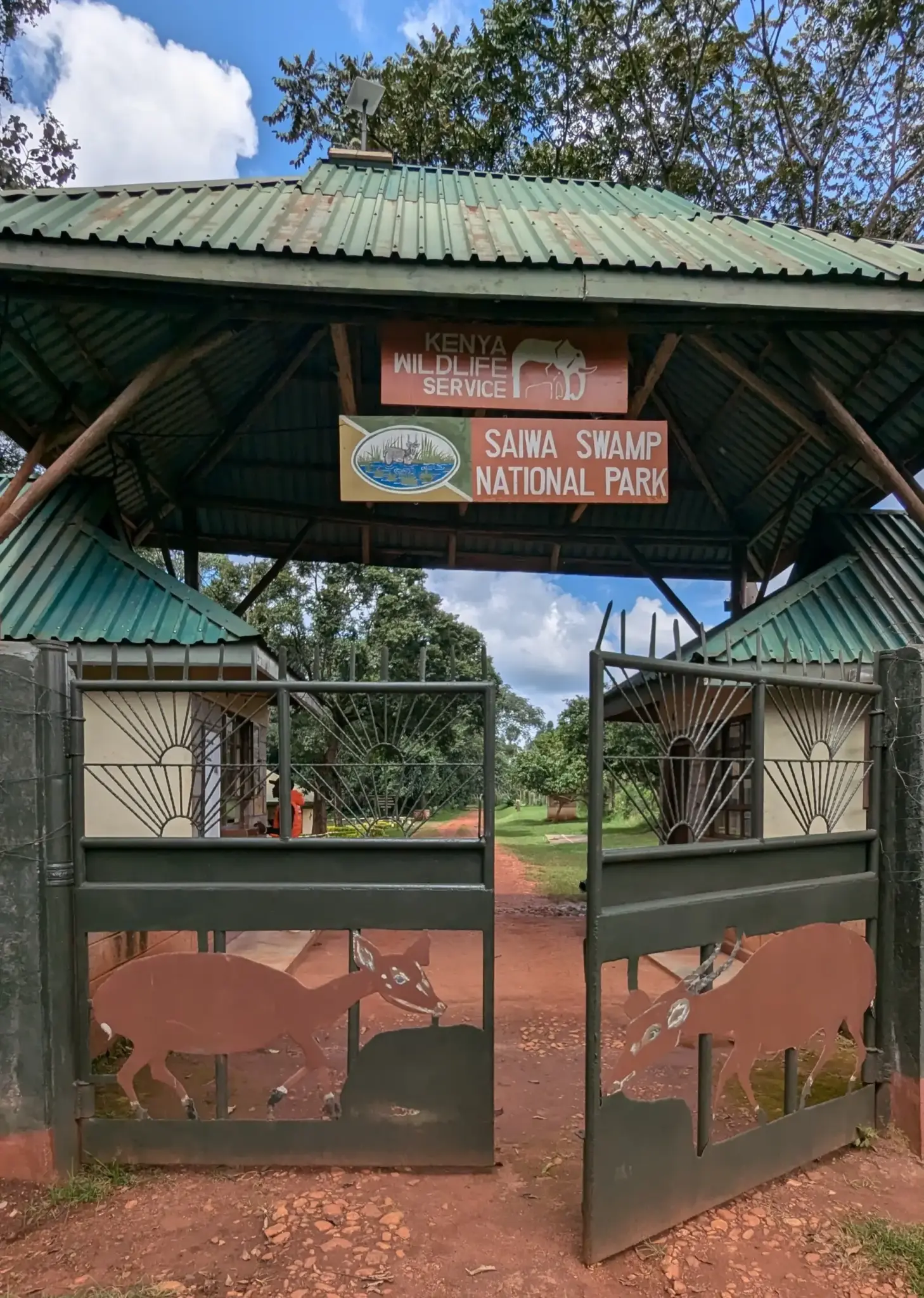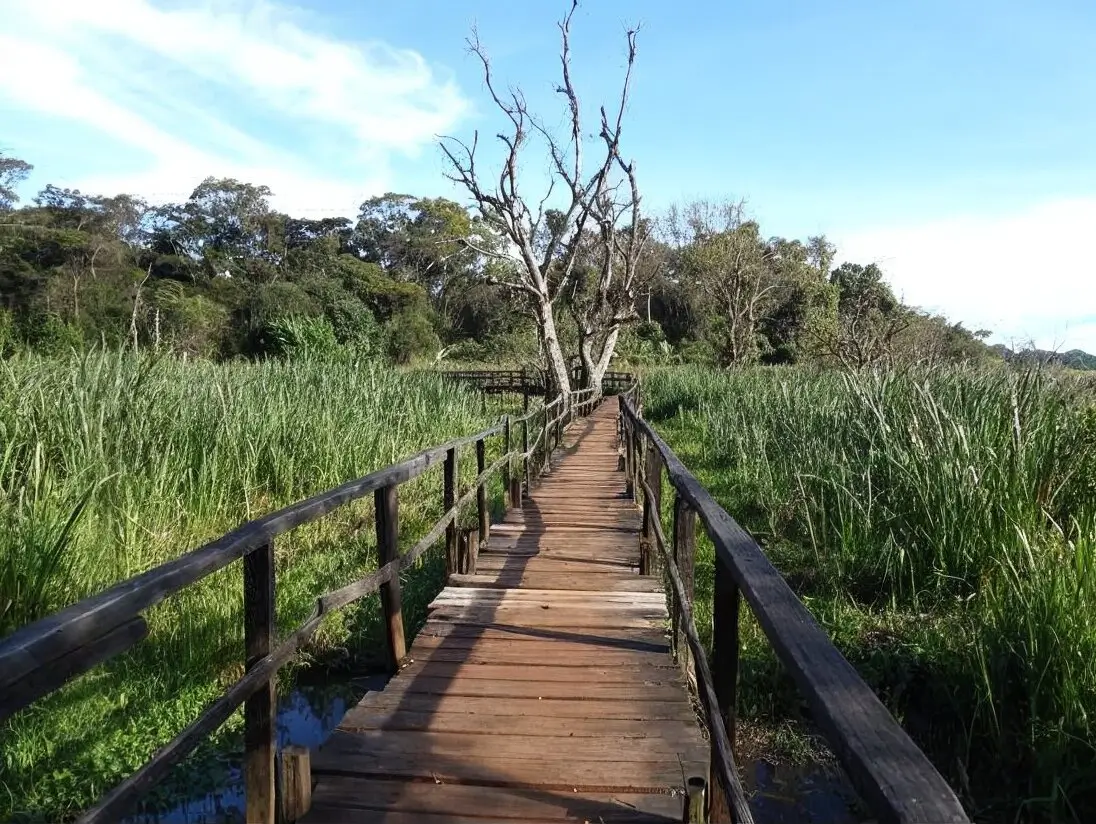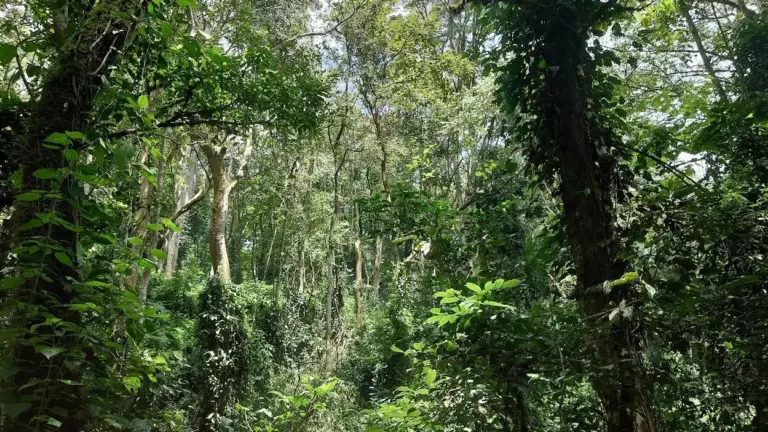
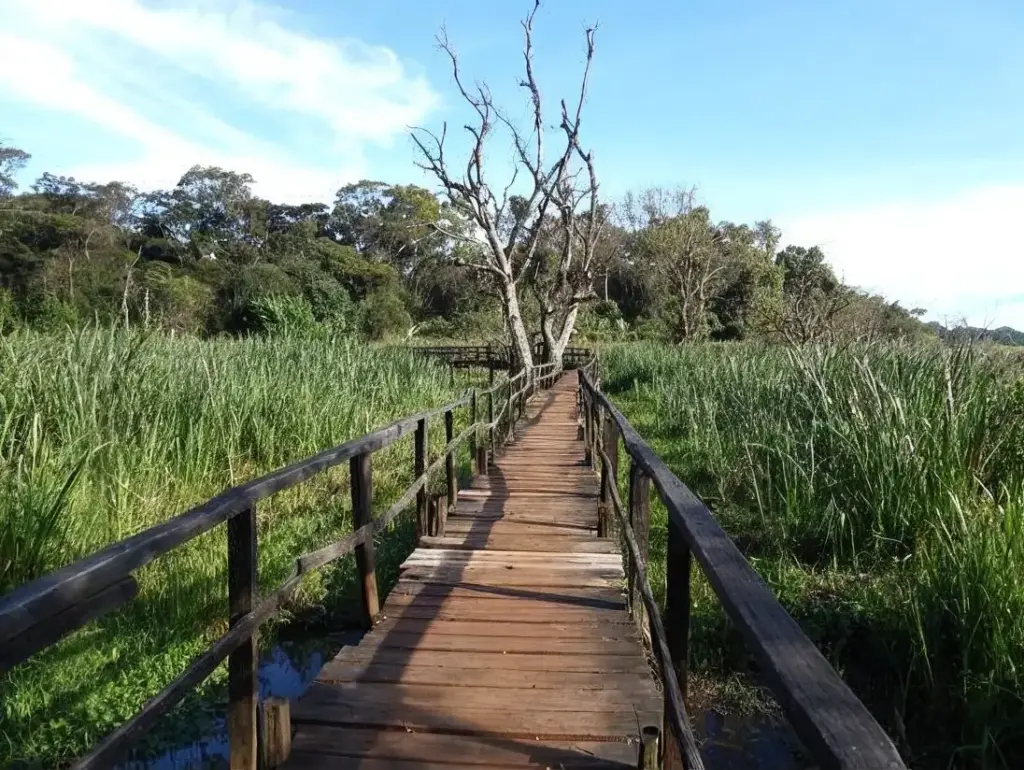
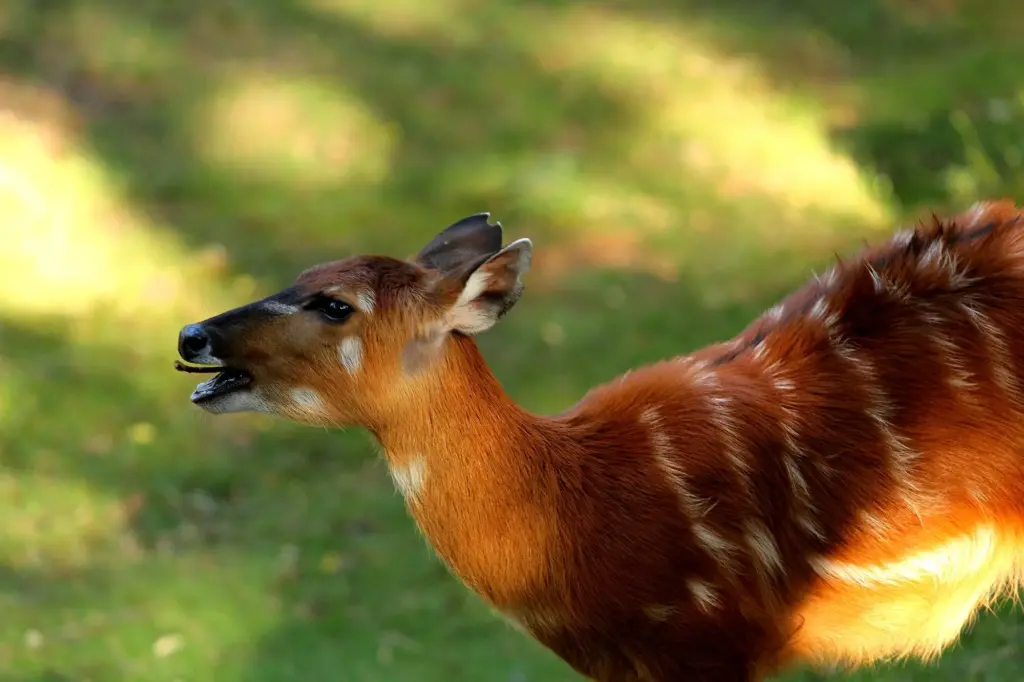
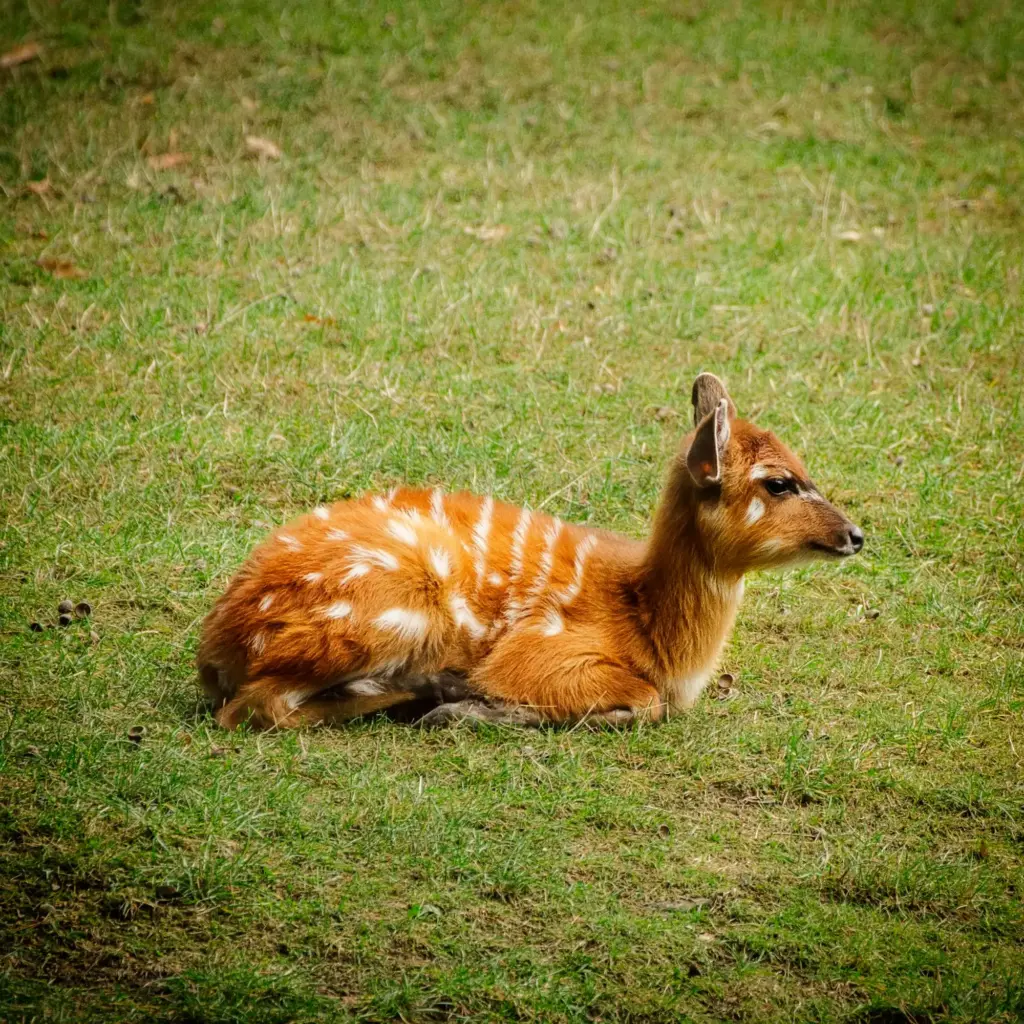
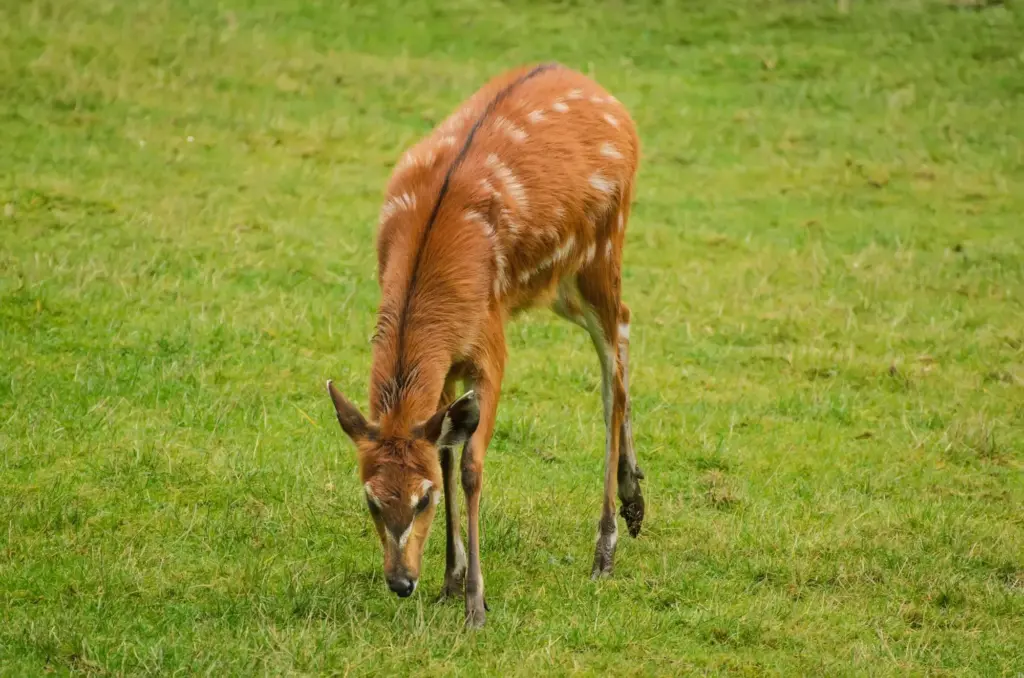

Somewhere in the lush highlands of western Kenya, tucked behind papyrus reeds and cathedral-canopy forest, something remarkable is happening. A semi-aquatic antelope wades chest-deep through murky water. A rare African finfoot slips between lily pads. A tree hyrax screams from the dark. And you are watching all of it from an elevated wooden boardwalk, in near-total silence, in a park so small you could walk its boundary in an afternoon.
This is Saiwa Swamp National Park, and it is unlike anywhere else in Kenya.
While most visitors are fixated on the Maasai Mara’s big cats or Amboseli’s elephant herds, Saiwa sits quietly in Trans-Nzoia County, drawing a modest but devoted stream of naturalists, birders, and travelers who prefer depth over spectacle. And those travelers leave transformed.
Where Is Saiwa Swamp National Park?
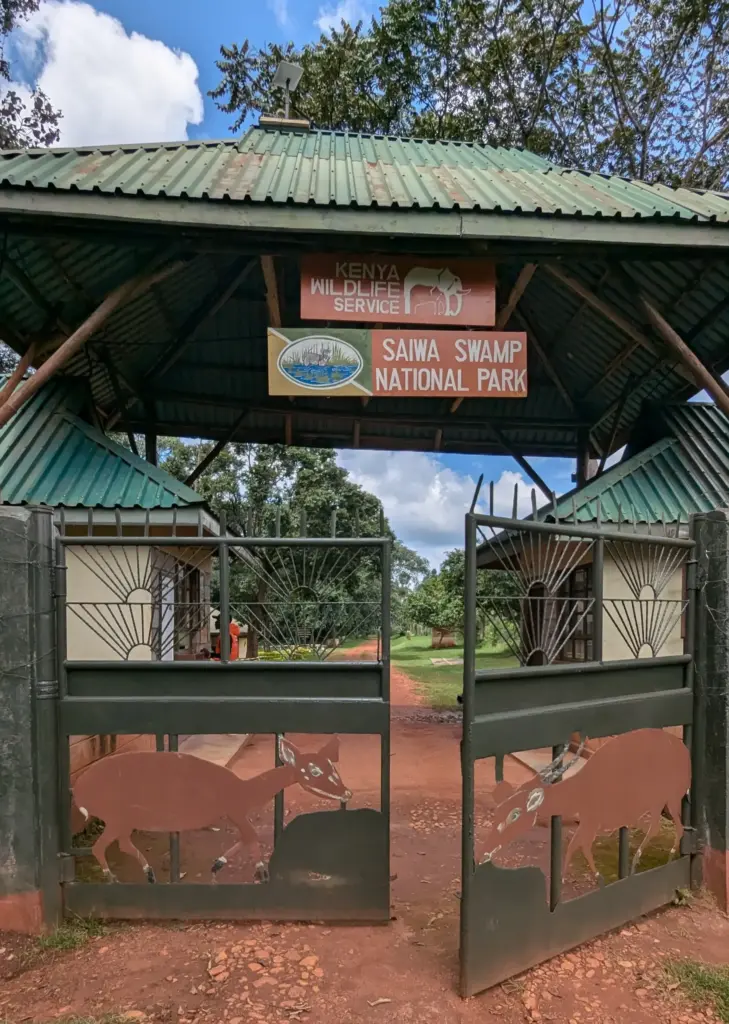
Saiwa Swamp National Park is located in Trans-Nzoia County in western Kenya, approximately 22 kilometres northeast of Kitale town, at an elevation of around 1,900 metres above sea level.
Getting There to Saiwa Swamp National Park
- From Kitale: The main gateway. Head north along the Kapenguria Road to Kipsaina junction, where a 5-kilometre murram (gravel) road leads directly to Saiwa gate. The full drive from Kitale takes around 30 minutes. Matatus run in this direction, though a private vehicle or taxi gives more flexibility.
- From Eldoret: Approximately 70 kilometres south of Kitale, around 90 minutes by road.
- From Nairobi: About 340 kilometres via Nakuru or the A1 highway. The drive takes five to six hours. Overnight buses serve Kitale regularly.
- By air: Kitale airstrip lies 27 kilometres from the park. Most visitors travel by road, given good highway conditions. A standard saloon car handles the access roads comfortably in dry weather.
What Makes Saiwa Swamp National Park Unique?
Kenya’s Smallest National Park
At just 3 square kilometres, Saiwa holds the distinction of being the smallest national park in Kenya. It was gazetted in 1974 specifically to protect the sitatunga antelope and the wetland ecosystem it depends on. That singular conservation purpose gives Saiwa a focus and intimacy that larger parks cannot replicate.
A Rare Wetland Ecosystem
Kenya is globally associated with savannah grasslands, but Saiwa protects something far rarer: a functioning, intact freshwater swamp ecosystem in East Africa. The park is centred on the Saiwa River, which feeds a network of papyrus stands, sedge marshes, open water channels, and riparian forest. This variety of micro-habitats within such a compact area creates extraordinary biodiversity density.
Elevated Boardwalks and Observation Towers
Rather than driving through the park in a vehicle, visitors explore on foot along raised wooden boardwalks and footpaths. Four observation towers are positioned at strategic points overlooking the swamp, giving you elevated, unobstructed sightlines into the water below. Birds behave as though you are part of the canopy. Sitatungas wade below you, unbothered. The whole experience is quiet and immersive in a way that vehicle-based game drives rarely are.
A Living Botanical Trail
Saiwa Swamp National Park is also a serious botanical destination. Tree species throughout the park are labeled with marble stone markers, giving walkers a guided introduction to the forest’s flora. Among the notable finds is the Meru khat tree, which towers above the canopy here at the edge of its natural range. It is a small but distinctive touch that sets Saiwa apart from parks where the vegetation is simply a backdrop.
Wildlife and Birdlife at Saiwa Swamp
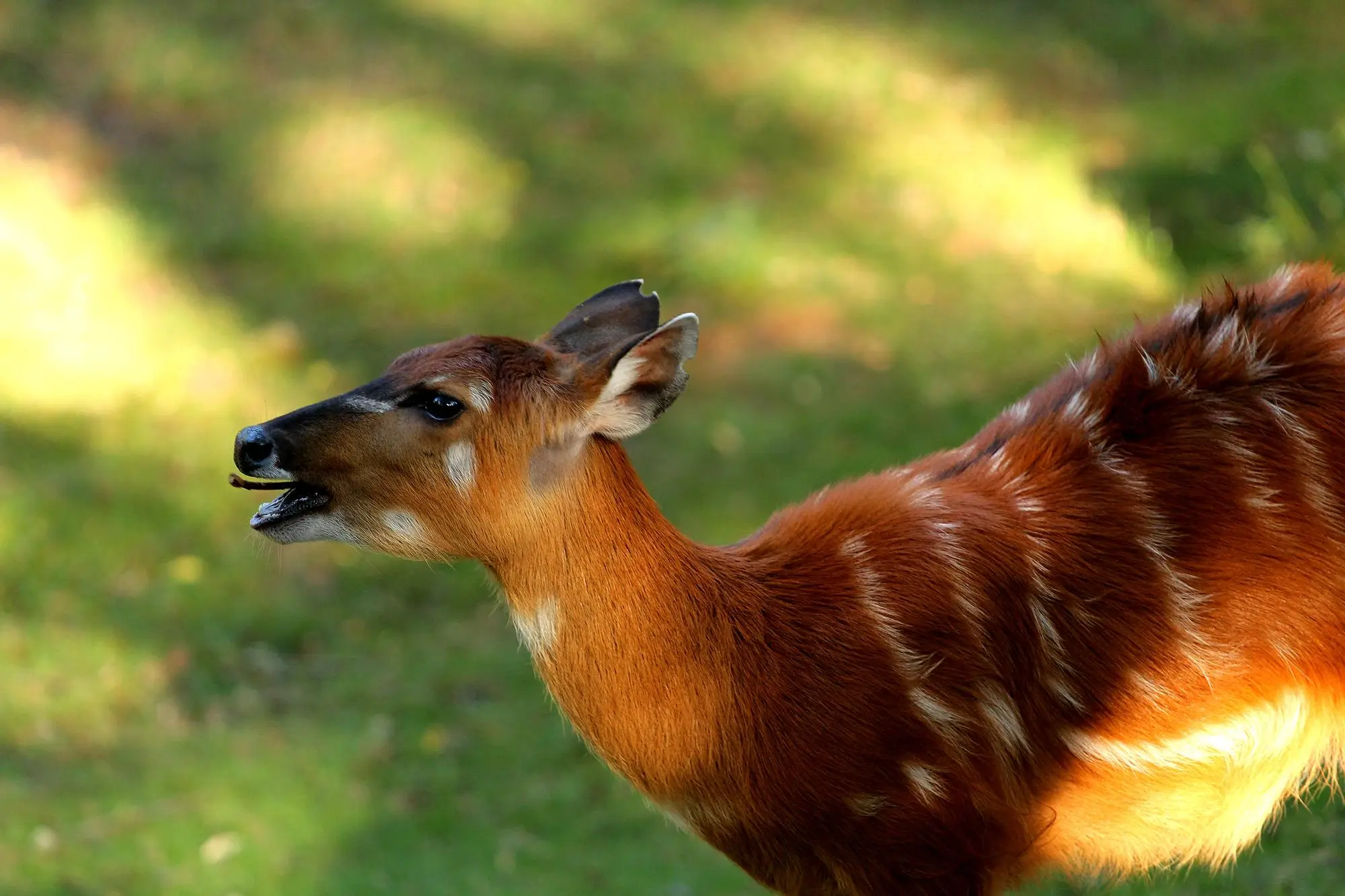
The Sitatunga Antelope: Saiwa’s Star Resident
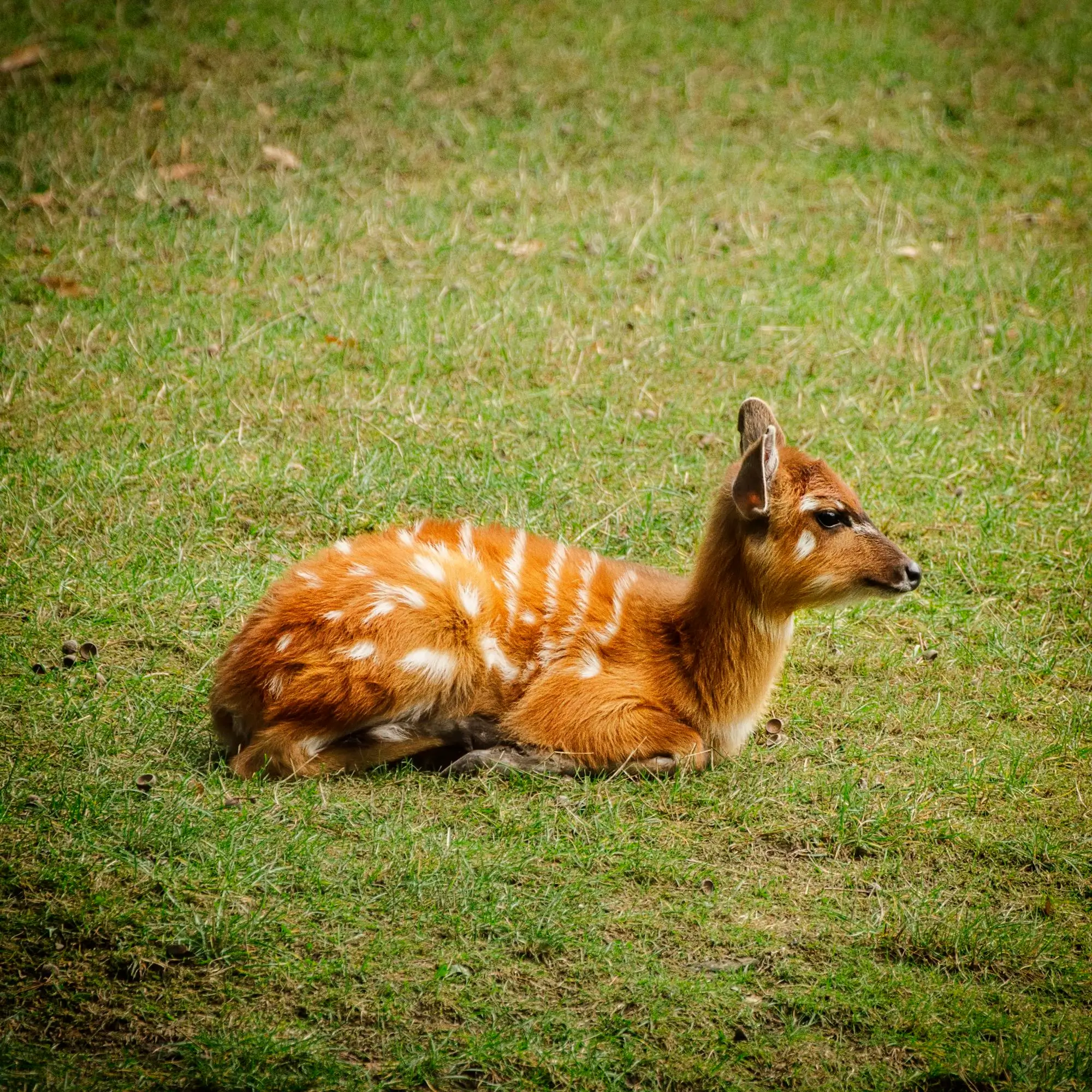
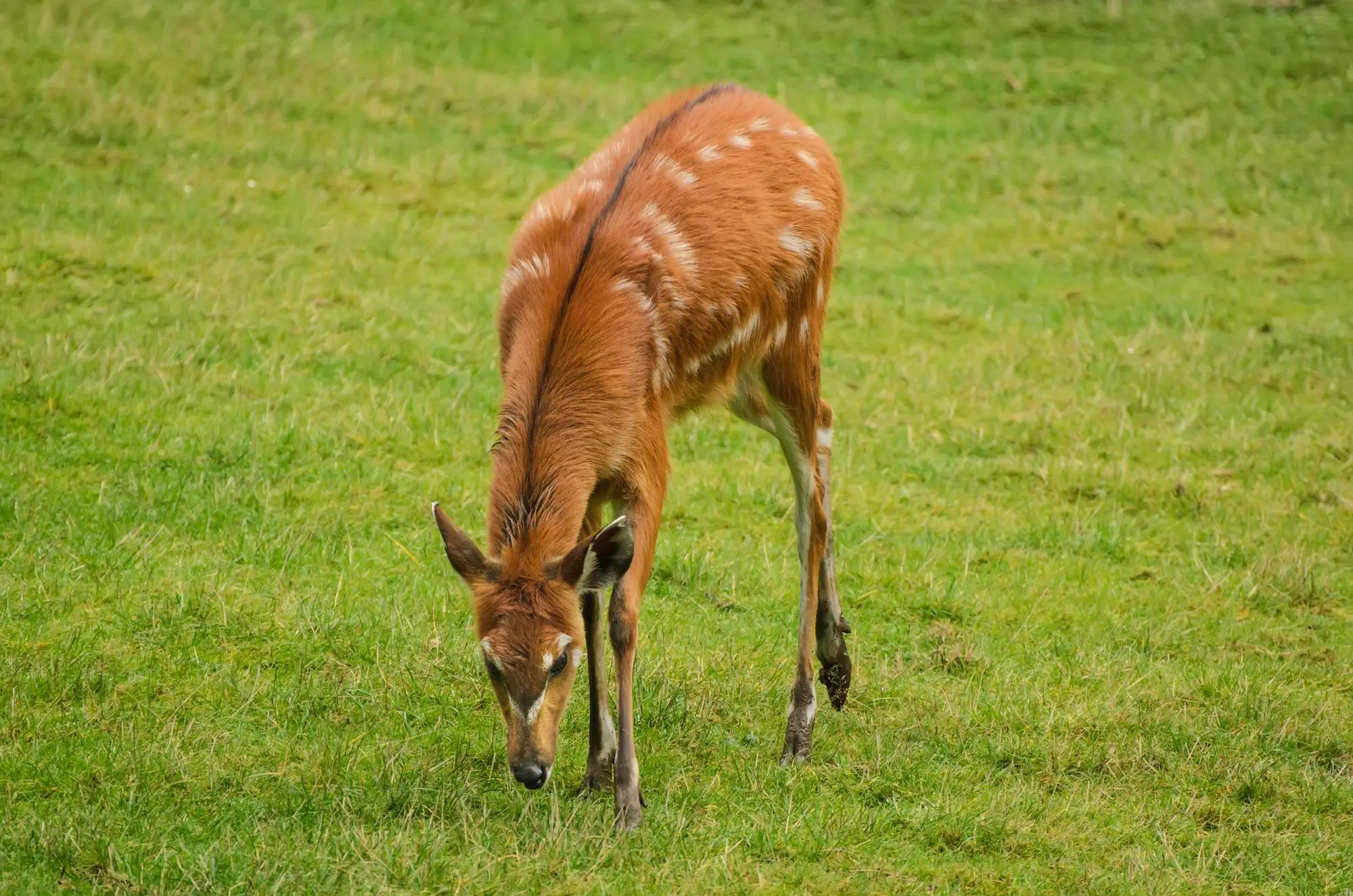
The sitatunga (Tragelaphus spekii) is the reason Saiwa Swamp exists as a national park. This shaggy-coated antelope is a specialist of swampy habitats, with elongated, splayed hooves that let it walk confidently on floating vegetation and wade through boggy ground. Males carry spectacular spiral horns and a rich chocolate-brown coat with white markings. Females are smaller and reddish-brown.
Sitatungas are naturally elusive and largely confined to dense papyrus swamps, making them very difficult to observe elsewhere in East Africa. At Saiwa, the elevated boardwalks place you perfectly above their habitat. Patient observers who arrive early are regularly rewarded with close, unhurried views.
Birdwatching in Kenya: Saiwa’s World-Class Avifauna
Saiwa Swamp is one of Kenya’s premier birdwatching destinations and a designated Important Bird Area (IBA), with over 372 recorded species in a park of just 3 square kilometres.
Headline species include:
- African finfoot (Podica senegalensis): One of Africa’s most sought-after wetland birds, and Saiwa is among the most reliable sites in Kenya to see it.
- Ross’s turaco: A vivid, crested species reaching its eastern range limit here.
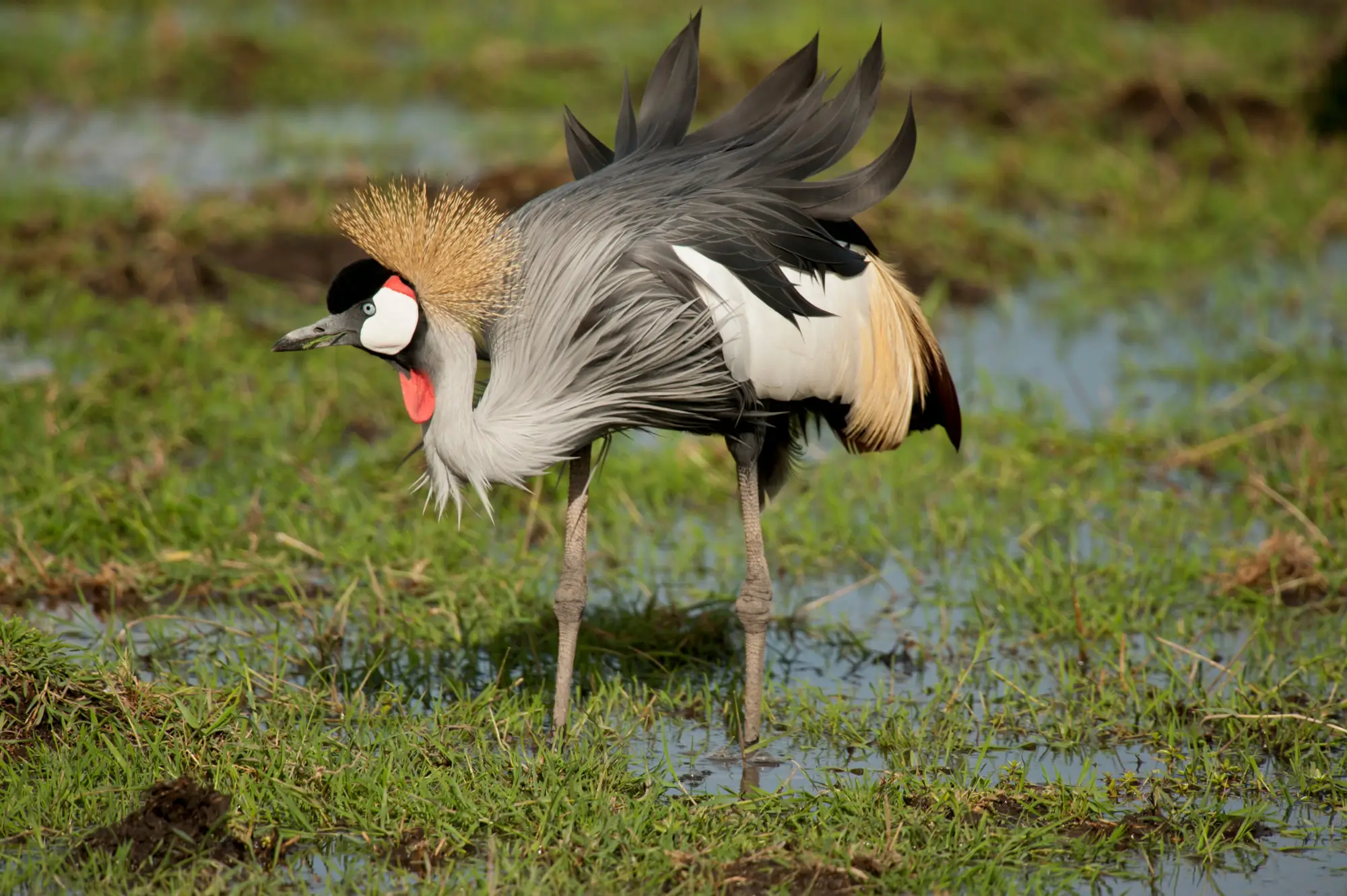
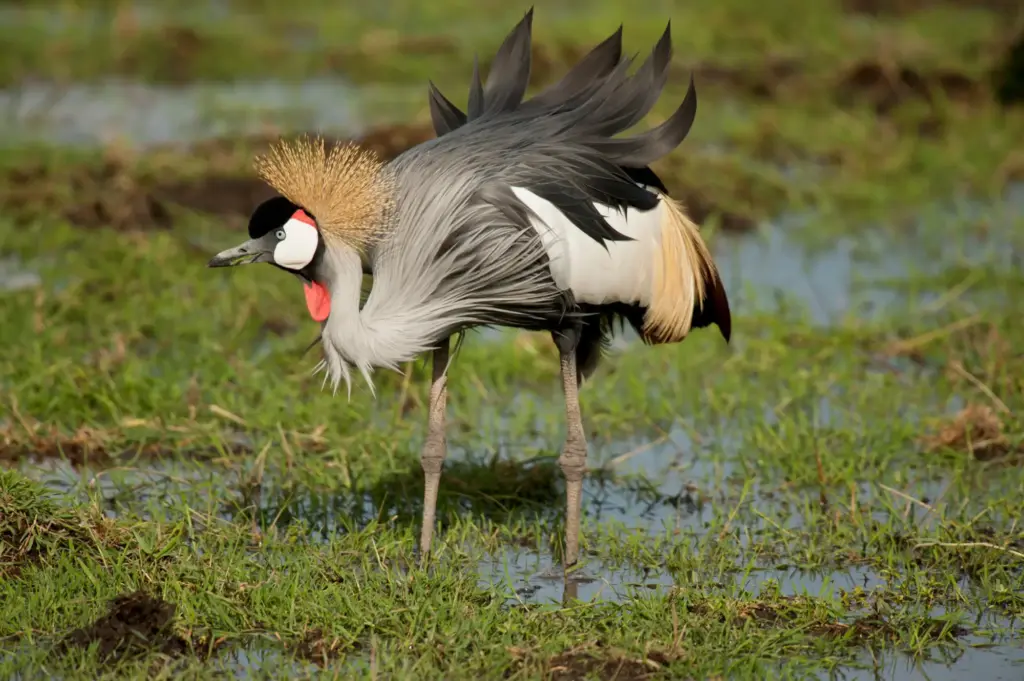
- Grey crowned crane: Kenya’s national bird, occasionally seen foraging at the swamp’s edges, sometimes with chicks.
- Narina trogon: A jewel of the forest interior, rarely seen but unmistakable.
- Hartlaub’s marsh widowbird and yellow bishop: Both are associated with the swamp’s open grassy edges.
- Black-and-white casqued hornbill: A dramatic forest bird, often heard before it is seen.
- Papyrus gonolek: A skulking species tied almost exclusively to papyrus swamps.
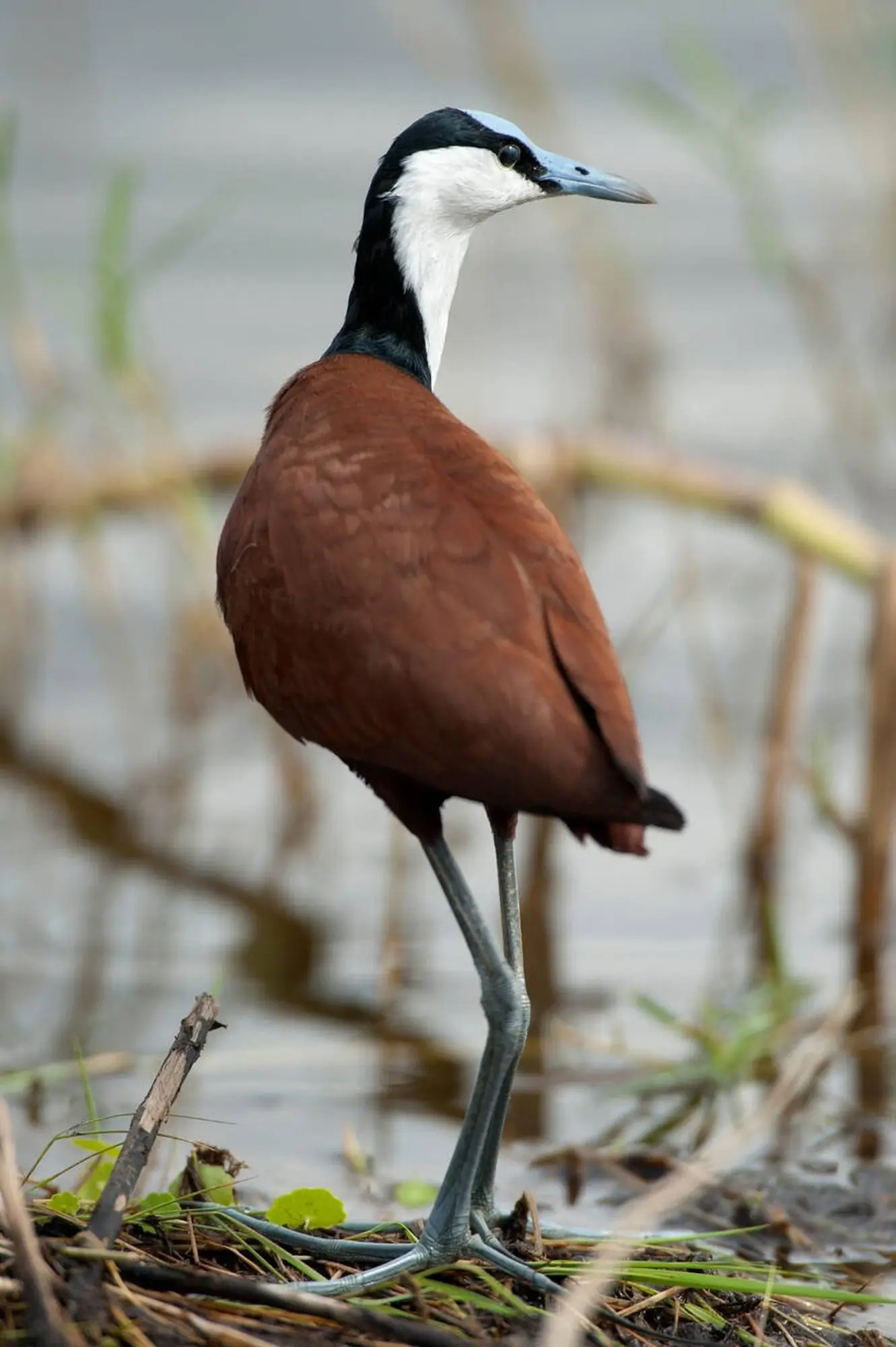
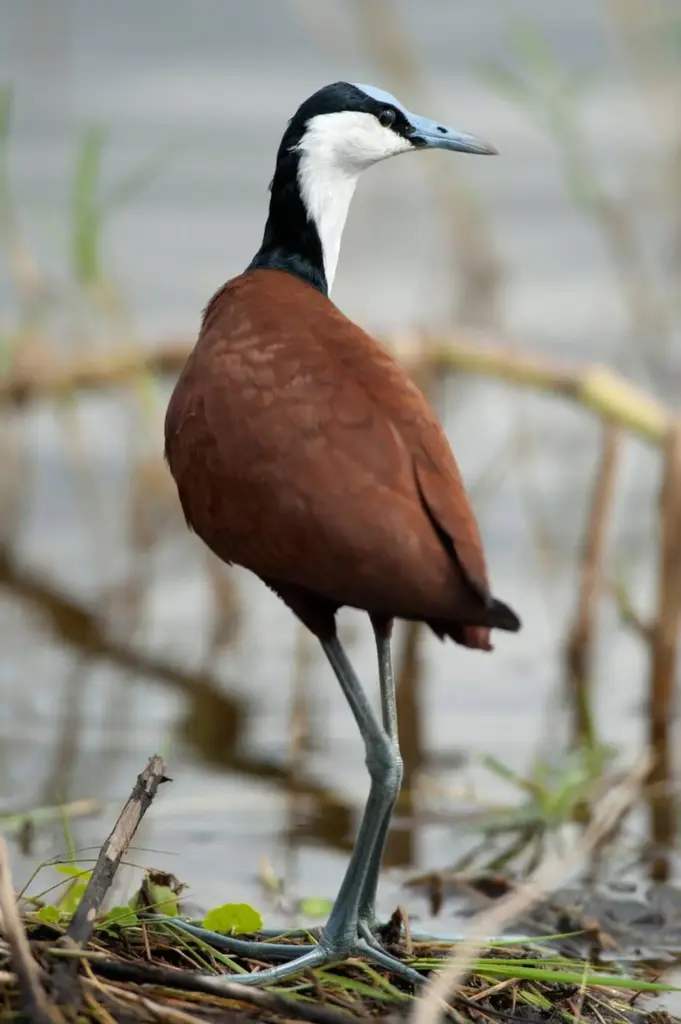
- Grey heron, African black duck, lesser jacana, African pygmy kingfisher, blue-headed coucal, malachite kingfisher, and numerous warblers, sunbirds, and raptors complete an exceptional list.
For birdwatchers visiting Kenya, Saiwa fills a specific niche: it delivers forest and wetland species that savannah parks do not offer, making it an ideal complement to any broader Kenya birding itinerary.
Other Wildlife
Beyond sitatungas and birds, the park supports:
- De Brazza’s monkey: A striking, bearded primate of the riparian forest.
- Black-and-white colobus monkey: Easily spotted leaping through the canopy.
- Potto: A nocturnal primate related to the bush baby, occasionally seen on nighttime or dusk walks.
- Giant forest squirrel: Often active in the canopy during the morning hours.
- Bushbuck: Often seen at forest edges around dawn and dusk.
- Spotted-necked otter: Occasionally visible in the waterways.
- Harvey’s duiker, monitor lizards, frogs, and butterflies round out the biodiversity.
The park has no dangerous megafauna, so you walk the trails without an armed escort, adding to the relaxed, exploratory atmosphere.
Things to Do at Saiwa Swamp National Park
Nature Walks and the Botanical Trail
Walking is the only way to experience Saiwa, and this is precisely what makes it wonderful. The trail network winds through papyrus stands, beneath riverine forest, and along open swamp channels. As you walk, look out for the marble-labeled trees that turn the path into an informal botanical guide. The total distance is modest enough to cover in a half-day, but most visitors slow down considerably once inside.
Birdwatching
Arrive at or before sunrise. The two to three hours after first light represent peak bird activity, and the soft morning light makes photography far more rewarding. A good pair of 8×42 or 10×42 binoculars and a copy of the Helm Field Guides to East African birds will serve you well.
Wildlife Photography
Saiwa rewards patient photographers. The boardwalks and observation towers let you set up and wait for subjects rather than chasing them from a moving vehicle. Sitatungas reflected in still water, kingfishers hovering above channels, and colobus monkeys backlit in the canopy are all achievable with a mid-range telephoto lens. A monopod helps at the towers.
Corporate Events and Team Building
The park has an education and information centre with a conference hall available for organised groups. It is a genuinely unusual setting for a corporate retreat or team-building day, and bookings can be made through the park warden or KWS headquarters.
Best Time to Visit Saiwa Swamp National Park
- Dry Seasons (Most Comfortable): The long dry season (June to October) and short dry season (January to February) offer firm trails, reliable wildlife activity, and easier sightlines through slightly lower vegetation.
- Wet Seasons (Fewer Crowds, More Birds): The long rains (March to May) and short rains (November to December) bring migrant bird species, vivid green scenery, and dramatically thinner visitor numbers. Some trails become waterlogged, so waterproof boots are essential. The park stays open year-round.
- Temperature: At nearly 1,900 metres, Saiwa runs cool. Daytime temperatures sit between 15°C and 25°C, with early mornings dropping to around 10°C. Pack a light fleece regardless of the season.
Park Fees and Practical Information
Entry Fees
Fees are structured by residency and nationality. For current rates, visit the official KWS page for Saiwa Swamp National Park, as prices are updated periodically.
Payment is made through the KWS eCitizen platform via MPesa or Visa Card. It is strongly recommended to pay in advance rather than at the gate.
Guided Tours
A KWS guide can be arranged at the gate for an additional fee. Guided tours are a worthwhile investment, particularly for first-time visitors or serious birders, as guides know the specific spots where sitatungas and key bird species are most reliably found.
Opening Hours
The park is open daily from 6:00 AM to 7:00 PM, including public holidays. No entry is permitted after 6:15 PM.
Accommodation Inside the Park
Saiwa National Park has two in-park accommodation options managed by KWS:
- Tree Top Hut: A unique two-person unit set in the forest canopy. It has two single beds, electricity, bedding, and bathroom facilities. There is no kitchen, so guests should bring cooked food or use the campsite kitchen nearby. A memorable choice for couples or honeymooners.
- Sitatunga Public Campsite: Two round thatched huts set on an open grass lawn overlooking the swamp. The camp is electrically powered and includes water, toilet and bathroom facilities, a kitchen area, and the option of an evening bonfire. Public campsites do not require booking.
For banda and special campsite reservations, contact the park warden or email KWS reservations at reservations@kws.go.ke.
What to Carry
- Binoculars (essential)
- Insect repellent
- Waterproof boots or sturdy hiking shoes
- Light rain jacket
- Sunscreen
- A camera with a telephoto lens
- Water and snacks (no vendors inside the park)
Travel Tips for Visiting Saiwa Swamp
Set the Right Expectations
Saiwa is not a dramatic spectacle. There are no lion kills, no wildebeest stampedes, no convoys racing toward a cheetah sighting. What it offers instead is sustained, quiet engagement with a living ecosystem. Allow at least three to four hours inside the park; serious birders should plan for a full day. Visitors who arrive with patience leave deeply satisfied. Those chasing Masai Mara energy tend to miss everything happening around them.
Safety and Etiquette
- Move quietly on the boardwalks. Heavy footsteps carry through the structure and disturb wildlife below.
- Keep voices low near the observation towers.
- Stay on designated trails. Swamp edges are deceptively soft.
- Let the gate staff know your planned route before heading in.
Conclusion: Kenya’s Most Underrated Wildlife Experience
There is a particular kind of travel satisfaction that comes not from ticking a bucket list, but from discovering something genuine before the crowds arrive. Saiwa Swamp National Park offers exactly that. It is small, quiet, and rewards patience. In return, it gives you the sitatunga wading at dawn, an African finfoot ghosting across still water, and the very specific pleasure of standing somewhere few other visitors have stood, in a landscape protected because it matters.
Go early. Bring binoculars. Move slowly. The swamp will do the rest.
Planning a western Kenya itinerary? Saiwa Swamp pairs beautifully with Kakamega Rainforest (Kenya’s only tropical rainforest, about 50 kilometres south), Mount Elgon National Park, and the Cherangani Hills.